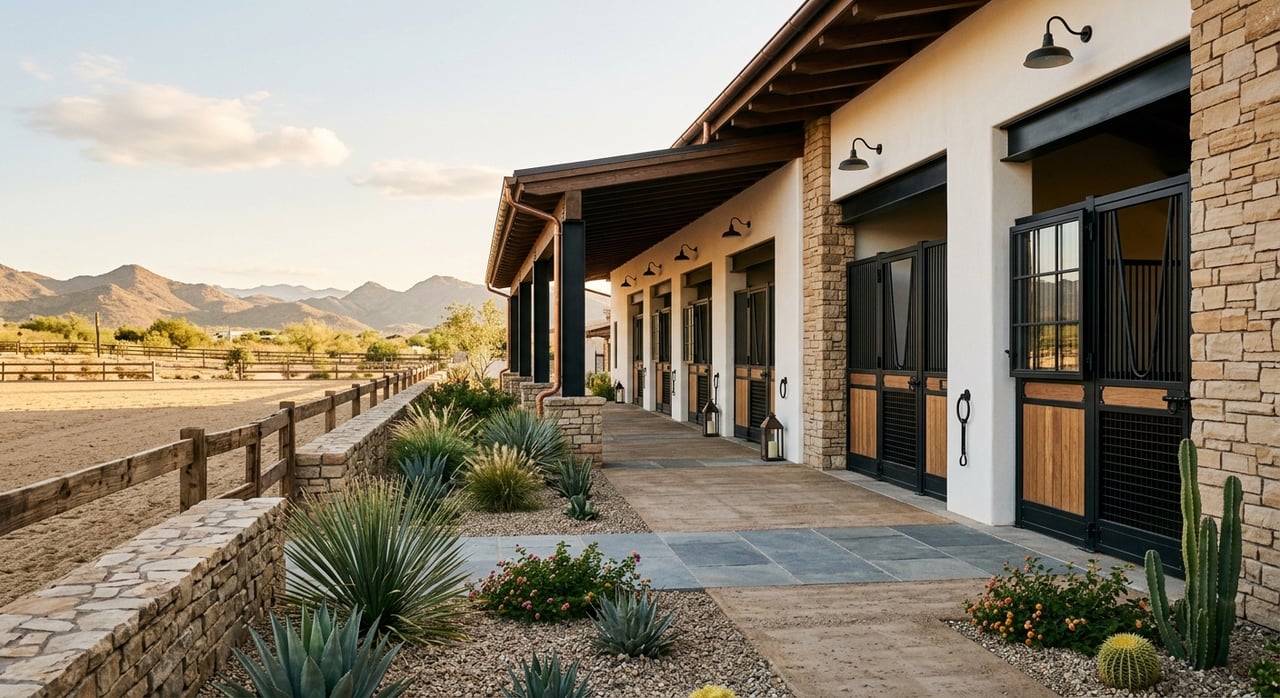
Buying Cave Creek Equestrian Properties With Confidence
May 7, 2026
May 7, 2026
Buying an equestrian property in Cave Creek can look simple on paper. You see acreage, a barn, and maybe trail access, and it feels like a fit. But in 85331, the smarter question is whether the property is actually usable for your horse plans once jurisdiction, zoning, setbacks, access, and private rules are all factored in. If you want to buy with confidence and avoid expensive surprises, this guide will help you focus on what matters most. Let’s dive in.
One of the biggest mistakes buyers make is assuming the 85331 ZIP code means the same rules apply everywhere. Cave Creek states that 85331 can include Cave Creek, Carefree, Phoenix, Scottsdale, and unincorporated Maricopa County. That means two nearby properties can have very different rules for horse use.
Before you evaluate a barn, arena, or trailer setup, confirm the parcel’s actual jurisdiction. This is the baseline step because zoning, trail rules, and use allowances can change depending on where the property sits.
Inside the Town of Cave Creek, the main residential zoning districts are Desert Rural (DR), Single Residence (R), and Multiple Residence (MR). For equestrian buyers, DR is usually the most relevant because it is designed to protect scenic vistas, natural habitats, hillsides, and washes.
That matters because a horse property in Cave Creek is not just about size. The zoning framework is built around preserving the land’s natural character, which can affect how and where horse improvements can be placed.
Cave Creek separates private ranch use from commercial ranch use in the DR district. Private ranch use requires at least two contiguous acres under single ownership and can include boarding, breeding, equine training, equine lessons, the sale of ranch animals, and youth-related activities.
Commercial ranches require at least five contiguous acres and special use approval. They also come with additional operational requirements, so buyers should not assume a larger parcel automatically supports a business-level horse operation.
Current DR minimum lot sizes include 43,000, 70,000, 89,000, and 190,000 square feet. In practical terms, that means listings can range from just under an acre to more than four acres before you even get into larger ranch properties.
Some residential parcels may allow limited small-ranch animals, but Cave Creek restricts barns, corrals, horse shades, and other private ranch uses to DR zones. In other words, the presence of land does not automatically mean the property supports the horse setup you want.
For equestrian buyers, usable acreage is often more important than total acreage. Cave Creek limits lot coverage and land disturbance, and that disturbance budget can include driveways, septic systems, and accessory uses.
The town also requires a 12-foot Native Habitat Corridor measured inward from property lines. That area must remain in a natural state except for limited approved uses such as driveway access, utilities, and trails. On paper, a parcel may look generous. On the ground, the buildable and functional horse area may be much smaller.
Cave Creek’s site and plot plan checklist gives you a strong preview of what matters. A proper plan should show:
For horse properties, topography, washes, and easements deserve special attention. A parcel with slope issues or access constraints can feel very different from one with flat, contiguous, trailer-friendly land.
Older horse properties can be appealing because the infrastructure is already there. But buyers should verify that existing barns, corrals, shades, and other improvements were lawfully established.
Cave Creek notes that legal nonconforming uses may require independent third-party documentation if the town cannot verify that the use existed legally before the current ordinance. If you are buying an older equestrian parcel, permit history and prior-use records are important parts of due diligence.
In Cave Creek, accessory buildings and uses generally require zoning clearance and sometimes building permits before they are established. In DR zones, detached accessory living quarters, corrals, barns, horse shades, and other private ranch improvements can be allowed when they are incidental to the home.
That is why future planning matters even if the current setup works for you today. If you may want to expand the horse facilities later, you should understand the approval path before you close.
Fence planning is part of horse-property planning. In DR zones, all fences, including corral fences, must be set back at least 12 feet from property lines.
Cave Creek also requires a building permit for fences or walls that are 4 feet or taller. That can affect layout, turnout planning, and the total amount of space you can use efficiently.
If evening riding is part of your routine, lighting deserves a close look. Cave Creek’s dark-sky lighting standards are intended to reduce glare and light trespass.
That means arena or barn lighting must meet shielding, downward-lighting, and pole-height standards. A property that seems ideal for evening use may still need careful planning to comply.
Some buyers want a private horse property. Others want the option for boarding, lessons, or a larger-scale operation. In Cave Creek, the distinction matters.
Commercial ranches have added requirements beyond acreage and approvals. Cave Creek requires turnout areas and pens to be shown on the site plan, manure storage to be at least 60 feet from property lines, and fly-control and dust-control plans for barn, stable, pasture, and parking areas. Commercial ranches also need direct access to at least a collector road.
If your vision includes revenue-generating horse use, you need to confirm that the parcel supports that use under the correct rules. This is not an area for assumptions.
Some 85331 properties are not in the Town of Cave Creek at all. If the parcel falls in unincorporated Maricopa County, the rule set changes.
The county says limited equestrian uses can be accessory to a single-family residence in rural districts. But arenas, riding lessons, horse rentals, off-site trail-ride staging, and similar uses may require special use approval or may not qualify as exempt agricultural use. For buyers, that means county property should be reviewed under county standards, not town assumptions.
Trail access is one of Cave Creek’s defining equestrian advantages. The town says its trail network connects neighborhoods to the Town Core, Spur Cross Ranch Conservation Area, Cave Creek Regional Park, the Tonto National Forest, the Maricopa Trail, and Desert Foothills Land Trust properties.
The town also states that horses have the right-of-way on trails. For many buyers, that connectivity is a major part of the appeal, but it should be evaluated as an operating feature, not just a lifestyle headline.
Cave Creek Regional Park offers more than 11 miles of shared-use trails and a horse staging area. Spur Cross Ranch Conservation Area offers more than seven miles of hiking, biking, and horseback-riding trails and also provides horse staging.
The broader regional trail system is large and expanding. Rather than focus on a single mileage figure, it is more useful to think of Cave Creek as connected to a substantial regional trail network that supports longer rides and varied terrain.
Cave Creek warns that motorized vehicles are prohibited on trails or in washes. It also notes that roads, trails, and washes may become impassable during extreme weather.
For horse owners, that means access and haulability should be part of your property review. A parcel can have outstanding trail proximity and still present practical challenges for trailers, service vehicles, or wet-weather movement.
Zoning is only part of the picture. Cave Creek makes clear that it does not enforce CC&Rs because they are private contracts.
For equestrian buyers, that is a critical point. HOA rules and CC&Rs can be more restrictive than zoning and may affect fences, trailers, barns, parking, or any planned boarding or home-based horse activity. A property may be legally zoned for a use that is still narrowed by private restrictions.
Horse property due diligence in Cave Creek should go beyond structures and zoning. The town notes that sewer service is not available everywhere, water rates may be higher, trash service is not municipal, and roads are generally rural.
It also notes that properties outside the Cave Creek Water Company may need Arizona Department of Water Resources well permits. In addition, the Arizona Department of Real Estate advises land buyers to confirm permanent legal access, water supply, and adjacent land uses before signing. These are practical ownership issues that directly affect how a horse property functions day to day.
From a buyer’s perspective, the strongest Cave Creek equestrian properties tend to share a few traits. Horse use is clearly legal, the acreage is truly contiguous enough for the intended setup, and the access works for trailers and service needs.
Just as important, the barn, corrals, arena, or future improvements can fit within setbacks, disturbance limits, and native-habitat requirements. When these pieces line up, you are not just buying land. You are buying a property that is more likely to support your goals now and hold up well over time.
Buying a Cave Creek equestrian property should feel exciting, not uncertain. If you want a strategic second set of eyes on zoning fit, parcel usability, access, and overall purchase risk, Allison Cahill offers discreet, white-glove guidance for buyers seeking clarity in this specialized market.



Detail-oriented, Cahill has a passion for studying the market and educating clients about current conditions, inventory and trends. “I take my time with each client and listen to what they want,” she says. “My sellers like that I truly market their properties on all social media platforms and print publications, with the use of not only photography, but also video, drone and 3D-style tours of their homes.”