Arcadia Ranch vs New Construction in 85018
July 2, 2026
July 2, 2026
If you are torn between a fresh, turnkey home and a property with roots, Arcadia is one of the few Phoenix neighborhoods where both choices can make real sense. In 85018, buyers are not just comparing floor plans. You are also weighing lot history, long-term flexibility, and how much of the neighborhood’s character you want built into your daily life. This guide will help you compare Arcadia new construction homes with classic ranch living so you can decide which path fits your goals best. Let’s dive in.
Arcadia is not one uniform housing market. City of Phoenix neighborhood records show multiple Arcadia-area associations in 85018 with different boundaries, including Arcadia Osborn and Arcadia Camelback Mountain. That matters because home age, lot size, and rebuild activity can shift noticeably from one pocket to the next.
Arcadia also has a distinct land story. The City of Phoenix historic survey notes that the original 1919 plat included very large lots, with roughly ten-acre lots east of 56th Street and roughly five-acre lots west of 56th Street. The area was originally marketed for citrus groves and rural homesites, which helps explain why land and lot feel still carry so much weight today.
That history shapes how buyers experience the neighborhood now. Even when two homes are similar in size, the value proposition can look very different based on parcel size, tree canopy, and how the block has evolved over time. In Arcadia, the setting often matters just as much as the structure.
When most buyers talk about classic ranch living in Arcadia, they usually mean the postwar homes that arrived during the neighborhood’s major growth years. The broader Camelback East village page says a major portion of the local housing stock was built between 1950 and 1970. That is the era that tends to define the ranch identity many buyers picture today.
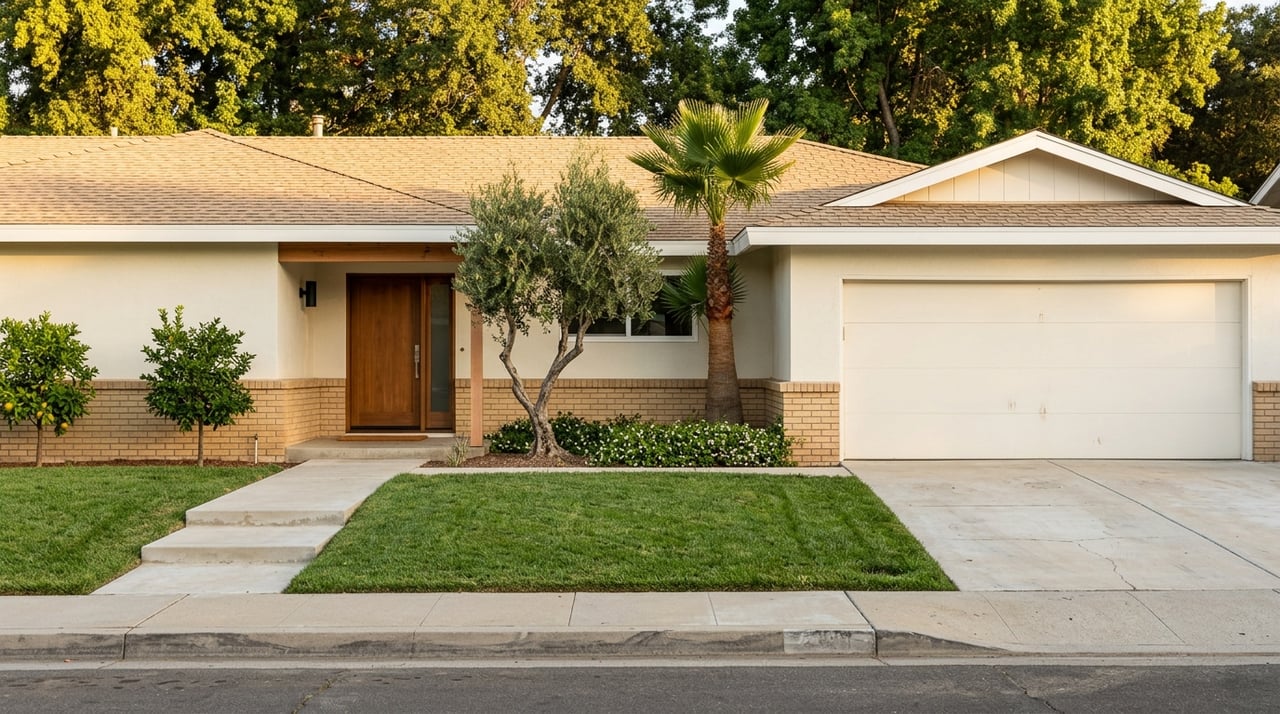
Ranch homes are generally single-story homes with low-pitched roofs, attached garages, large windows, and a strong connection to the yard. The appeal is often simple and lasting. You get one-level living, easy flow, and a floor plan that can feel open without trying too hard.
In Arcadia, that appeal often goes beyond the house itself. Many buyers are drawn to the mature character, larger-feeling lots, and established streetscape that older homes can offer. If you love the idea of space, trees, and a property that feels grounded in the neighborhood’s history, classic ranch living may speak to you right away.
New construction in Arcadia speaks to a different kind of buyer priority. If you want a home that feels ready from day one, newer builds often offer the cleanest path. You are typically getting modern systems, current finishes, and a layout designed around how many buyers live today.
There is also a building-performance advantage. New construction in Phoenix now falls under the 2024 Phoenix Building Construction Code, effective August 1, 2025, including the 2024 International Energy Conservation Code. In practical terms, that means a new home is built to current standards rather than relying on future retrofit work to improve efficiency.
That can matter a lot in Phoenix. Energy performance features such as insulation, air sealing, windows, and HVAC systems can be integrated during construction, which is generally more efficient than adding them later. For buyers who want fewer near-term updates and a more turnkey ownership experience, that is a meaningful benefit.
A classic ranch often wins on charm, single-level comfort, and a stronger sense of place. In Arcadia, many buyers see the house and lot together as part of the experience. You may be buying into mature landscaping, a more established block, and a home that feels tied to the neighborhood’s long story.
A new build often wins on immediate livability. You may get a more contemporary layout, newer materials, and fewer upfront repair projects. If your priority is convenience and current-code performance, new construction can offer a smoother start.
In Arcadia, the lot can be the deciding factor. Because the neighborhood began as a large-lot estate district and changed over time, newer homes are often infill or rebuilds on subdivided parcels rather than untouched original estate tracts. That can mean a beautiful newer home, but often on a different scale of land than an older property may offer.
If you are considering a ranch home, it helps to view it as both a lifestyle choice and a project decision. Older homes often benefit from selective updates rather than a full reset. The City of Phoenix recommends starting with an energy audit for historic properties, with common improvements including duct sealing, insulation, HVAC upgrades, water-heating upgrades, weatherization, and window repairs or retrofits.
That said, improvements should be planned carefully. The city notes that some energy-related upgrades can take 10 years or more to recover initial costs, depending on the work. For Phoenix residential customers of APS and SRP, the city also notes that $99 energy audits are available.
This is where a measured strategy matters. A ranch can offer excellent long-term enjoyment, but your timeline, renovation appetite, and budget discipline should all be part of the conversation before you move forward.
Not every older Arcadia home is historic, but some are. If a classic ranch is formally listed on the Phoenix Historic Property Register, exterior changes can trigger review. The city says listed properties are protected from demolition and other adverse alterations through a special review process, while routine maintenance and like-kind repairs generally do not need permission.
For more complex work, you may need a Certificate of Appropriateness and a pre-application meeting. That does not mean a historic property is off the table. It simply means due diligence becomes even more important if you are planning a major remodel, addition, or exterior redesign.
There may also be support for certain efficiency improvements. For eligible historic homes, Phoenix offers matching grants for some window-efficiency work, including weather-tight repairs, window film, thicker glass retrofits, and insulation measures. Those options can help, but they do not replace careful planning.
A new home can solve many practical concerns, but it does not automatically check every box. In Arcadia, the main tradeoff is often land and neighborhood texture. A newly built home may give you modern finishes and current systems, but it may sit on a subdivided parcel with a different feel than a more established ranch property.
You may also find that the streetscape feels less uniform from one block to the next. Because Arcadia includes several micro-markets, newer homes and older homes can sit very close together while offering very different ownership experiences. That is why broad neighborhood labels are less useful here than parcel-specific analysis.
If you are considering a teardown, custom build, or major redevelopment path, planning rules matter too. The Camelback East village page lists the Arcadia Camelback Special Planning District and the Camelback Road Overlay District among its planning documents. Buyers should confirm parcel-specific requirements early rather than assuming every lot allows the same approach.
Arcadia remains a premium market regardless of whether you prefer vintage or new. In May 2026, 85018 single-family data showed a median sales price of $1.51 million, an average sales price of $1.96 million, inventory of 203 homes, and 6.0 months of supply. Those figures suggest that location and land continue to carry major value across product types.
That is an important point for decision-making. In many neighborhoods, buyers are mostly choosing between house styles. In Arcadia, you are often choosing among three assets: preserved land, preserved architecture, or fully modernized living space.
If you are trying to choose between Arcadia new construction homes and classic ranch living, start with your non-negotiables. Think about how much work you want to take on, how important lot size is to you, and whether you value immediate ease more than long-term personalization. The right answer is usually less about trends and more about your ownership plan.
A classic ranch may be the better fit if you want:
A new construction home may be the better fit if you want:
In Arcadia, smart buying starts with asking better property-specific questions. Can the lot support your future plans? Is the home historic? Is the parcel inside a design-sensitive overlay or planning district? How much of the original structure can realistically be kept if you want to remodel? Those answers can vary from one address to the next, even within the same zip code.
If you want a clear strategy before you commit, working with an advisor who understands luxury property nuance, due diligence, and neighborhood-level differences can help you move with more confidence. To schedule a confidential consultation, connect with Allison Cahill.
Detail-oriented, Cahill has a passion for studying the market and educating clients about current conditions, inventory and trends. “I take my time with each client and listen to what they want,” she says. “My sellers like that I truly market their properties on all social media platforms and print publications, with the use of not only photography, but also video, drone and 3D-style tours of their homes.”